01
Show finishes in a real selling context
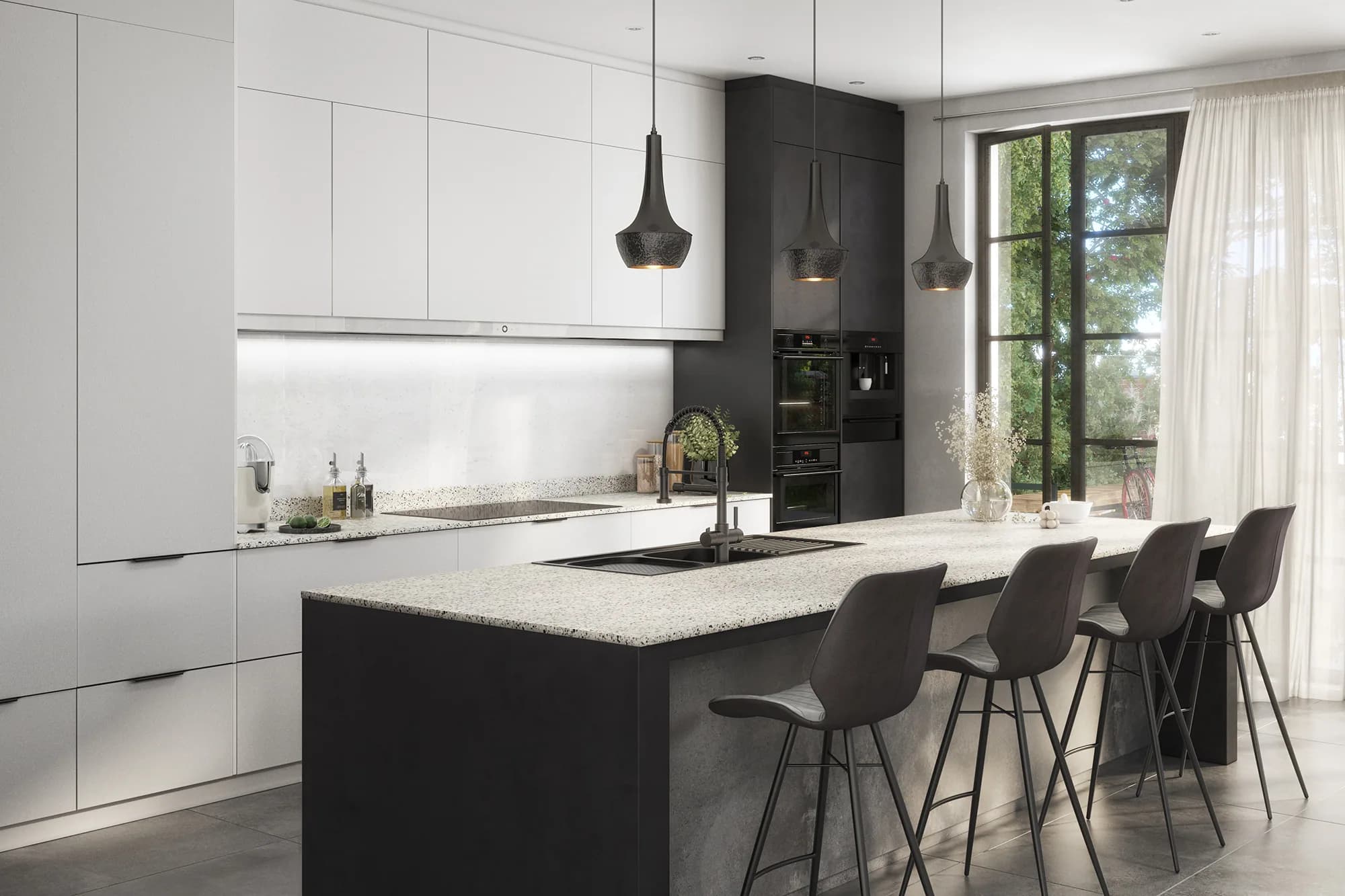
Place worktops, doors, sinks, taps and appliances in a believable kitchen while keeping the product—not the interior design—the focus.
Kitchen product CGI for brands
Cesma Studio creates product-led kitchen CGI from Belgrade for UK and international brands, manufacturers, retailers and agencies. Worktops, cabinet fronts, sinks, taps, appliances and material systems can share controlled scenes, repeatable detail views and approved finish rules across a range.
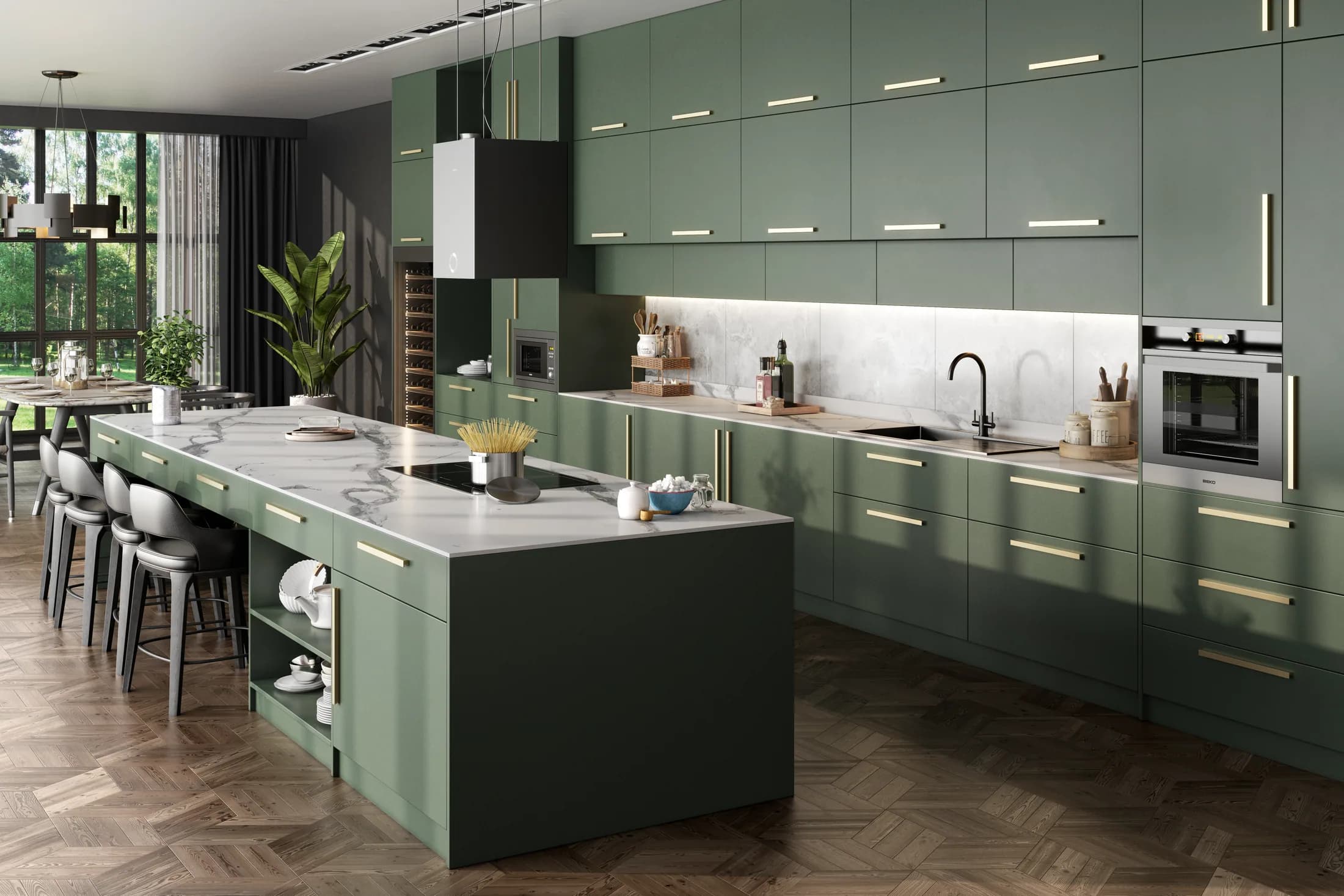
Kitchen surface CGI · lifestyle view · repeatable range production
The kitchen range problem
A worktop, cabinet, sink or tap launch can require a hero scene, main product view, close details, finish options and channel-specific crops. Photographing every possible combination quickly becomes slow, inconsistent and difficult to update.
A modular CGI scene keeps the kitchen credible while making the commercial product easy to compare. Approved camera and lighting rules can then be reused across related materials, products and seasonal releases.
Place worktops, doors, sinks, taps and appliances in a believable kitchen while keeping the product—not the interior design—the focus.
Create main, edge, corner, upstand, splashback and close-detail compositions that stay comparable across a material range.
Control cabinet colour, worktop, hardware, sink, tap and appliance finish without rebuilding or reshooting the entire set.
Plan website, brochure, campaign and social crops from one approved production direction instead of commissioning disconnected image batches.
Commercial outputs
Kitchen CGI works best when the output plan separates the product views customers need from decorative images that do not help comparison.
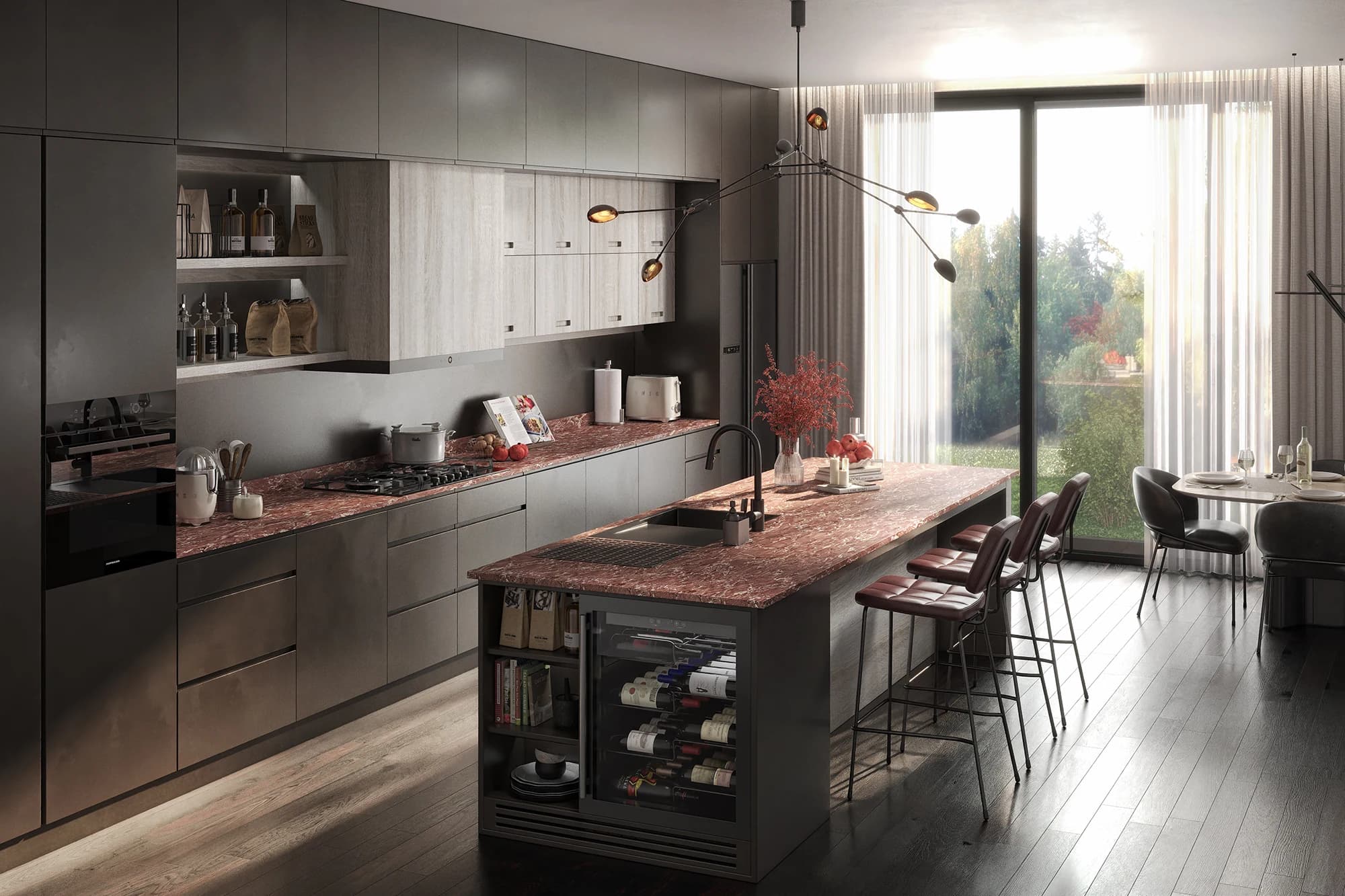
Product-led roomsets for launches, brochures, category pages and campaign use.
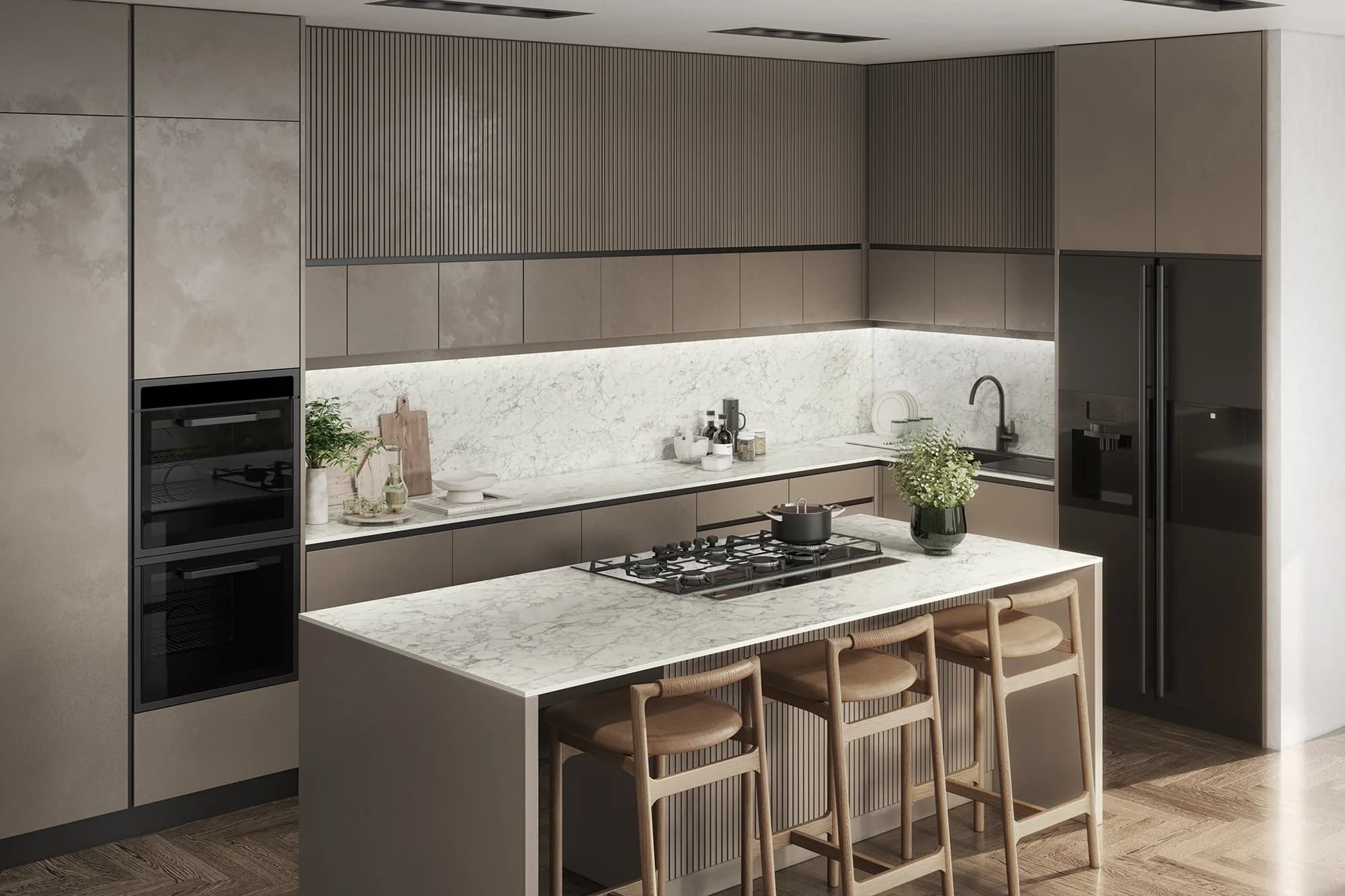
Edge profiles, corners, upstands, splashbacks and close material views for informed comparison.
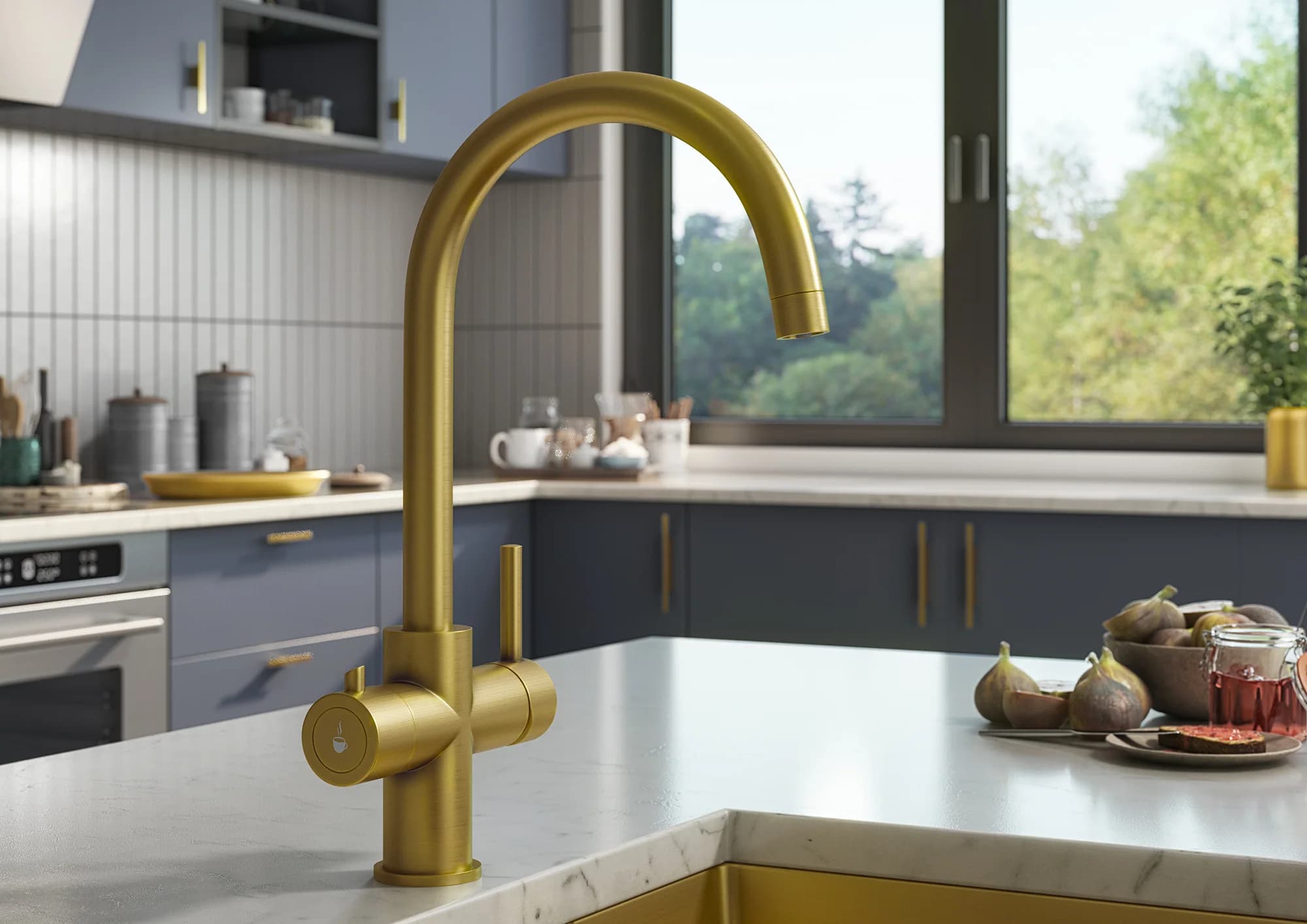
Coordinated product views and material variations across metal finishes and related products.
See the wider portfolio filtered to this production context.
View relevant product CGIA modular kitchen workflow
The room is treated as production infrastructure: modular enough to scale, controlled enough to protect product accuracy.
We identify products, finishes, required views, common scene elements, channel specifications and the order in which assets must launch.
A priority surface or product is used to approve proportions, styling, camera, lighting, material response and commercial emphasis.
The approved scene expands across worktops, cabinet finishes, sinks, taps, hardware, layouts and repeatable detail views.
Images are checked for product accuracy, finish naming, composition, crop and export requirements before channel-ready delivery.
Relevant production proof
Direct Online Services
Worktop Express and surface product ranges
The production system coordinates lifestyle, main, edge, corner, upstand and splashback imagery so new surfaces can enter a familiar visual structure instead of starting from a blank page.
View Case StudyCommercial fit
We create imagery around products and product ranges. The ideal brief comes from a manufacturer, brand, retailer, e-commerce team or agency with a commercial output plan.
Brief preparation
A useful brief defines both the physical product and the repeatable image logic needed across the range.
Questions before a brief
A useful quote depends on product information, output requirements and future range potential—not only the number of final images.
Both, provided the commercial product is the reason for the image. We can build a kitchen context around worktops, cabinets, sinks, taps, appliances or coordinated product systems. We do not position this as a consumer kitchen design service.
Yes, when the products share compatible geometry and composition. We plan the scene around the range so approved camera, lighting and styling can support controlled surface, cabinet and hardware changes.
Yes. Main views and repeatable detail compositions can be specified together, making each surface easier to compare across a product page or catalogue.
High-resolution scans or photography, colour references, scale information and finish notes are ideal. Physical samples can help for complex gloss, texture, translucency or metallic response, but are not required for every project.
Yes. Recurring catalogue and e-commerce production is a strong fit because approved sets, view templates and QA rules can be reused as new ranges are introduced.
Explore related product CGI services
Need the wider production model or more context about the team behind it?
Start with the real product range
We will review the fit, identify missing inputs and suggest the most practical starting scope—pilot, defined project or ongoing production workflow.
Send Your Product Brief